Wednesday, November 23, 2011

Why Latin?: Part 4 - Conclusion to John Martignoni's response to a question about the return of Latin to the Liturgy


By JOHN MARTIGNONI

Why Latin: Part 1, Part 2, Part 3 

Question:
I have been attending a Catholic Church in the diocese in which the priest and congregation sing some of the parts in Latin.  I am curious as to why the Catholic Church is bringing this back and in some parishes even saying the mass entirely in Latin.  It appears that the Church is going back to traditionalism.  How does this (Latin) entice new people to the Catholic faith?  If I were looking for a Christian faith to join and visited a parish with Latin, I would take Catholicism off my list.  I, myself, have considered looking elsewhere for a new faith because of this.  Shouldn’t the church be looking forward and seeking out modern ways to entice newcomers?  To many outsiders, the Catholic Mass is already very dry and boring with all of its prayers through Mass, let alone adding in Latin.  Please advise and help me understand the Latin importance in this modern age.    

Answer:
You are not the only person that I have seen or heard getting angry when it comes to Latin and to the Traditional Latin Mass (TLM).  But, what you need to understand, is that when the Novus Ordo Mass was introduced, and the TLM was abandoned virtually overnight, it created some deep wounds...wounds within the Body of Christ...that needed to be healed.  A lot of people felt like they had had their heart ripped out.  Many tried to adapt and adjust, but then they were almost immediately faced with a certain amount of "creativity" in the liturgy that only wounded them more deeply.

In spite of the words of Vatican II, individual priests began to tinker with the liturgy to make it more in line with their own personal opinions of what the Mass should be and with their own private vision of the "spirit of Vatican II."  Some priests would often change the wording of prayers - adding words here, taking them out there - or they would ignore the rubrics and other such liturgical abuses. Such abuses, among other things, led to a schism here and a schism there and to many people simply leaving the Church altogether.  The Body of Christ was wounded.  There were also many who did not go into schism, but were deeply wounded by these abuses, nonetheless.  And, as Scripture tells us, what affects one part of the Body affects all parts of the Body.  

The liturgy of the Church - any authentic liturgy of the Church - whether in English or in Latin, should not be a source of pain, nor a source of anger and bitterness, for anyone who calls themself a Catholic.  That is why Pope Benedict has taken steps to, in essence, reevaluate the liturgical reforms of the 60’s and 70’s in light of the Church’s ancient liturgical tradition.  And the first step in this reevaluation is to go back – back to the point where the wounds were inflicted, back to the point of rupture between the old and the new – and try to restore the connection between the two forms of liturgy.  This, he hopes, will heal wounds, promote harmony, and create an atmosphere where an authentic renewal of the liturgy may flourish.  

In a letter to the Bishops that accompanied his Motu Proprio, “Summorum Pontificum” (a document from the Pope making the Traditional Latin Mass more available to all), Pope Benedict said, “I now come to the positive reason which motivated my decision to issue this Motu Proprio…It is a matter of coming to an interior reconciliation in the heart of the Church.”

In making the TLM more available, the Pope is helping this reconciliation to occur by allowing each of us to rediscover our liturgical heritage and to participate in this liturgical “treasure,” as he has called it.  And it seems our Pope knows his business, because his actions have already led to some healing in the Body of Christ, as we have seen right here in our own diocese.  And they have led to discussions that may result in even greater healing in the Body in the future.

As I have stated previously, Latin is not necessarily my cup of tea, so I can somewhat understand where you’re coming from.  But, instead of reacting with anger and bitterness, we need to be a bit more open-minded and try to understand what the Church is doing and why.  And, we need to do our part to help promote the healing, the reconciliation, and the authentic liturgical renewal that our Pope is trying to engender.  If that means that we have to come out of our comfort zones a bit, well then, so be it.  Just look at the Cross and ask yourself if He would do any less for you.  As Archbishop Fulton Sheen used to say, “Jesus came to comfort the afflicted, and to afflict the comfortable.”  
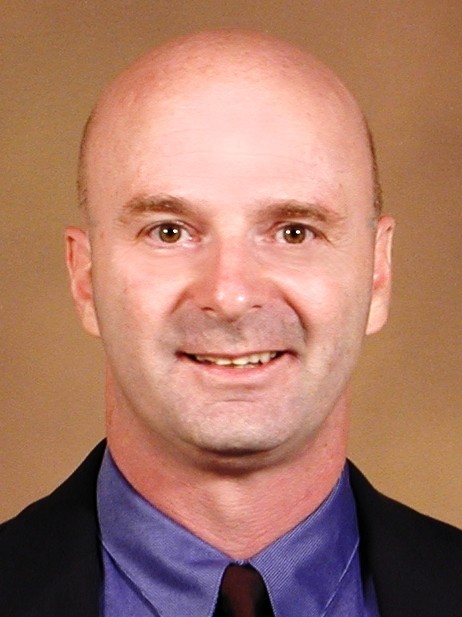

About John Martignoni
John Martignoni is the Director of the Office of Evangelization for the Diocese of Birmingham in Alabama and also the President of the Bible Christian Society. John's column, Apologetics 101, appears regularly in the diocesan newspaper, the One Voice.  If you have a question about the Catholic Faith, please send an email to: jmartignoni@bhmdiocese.org.  And check out John's free audio and written apologetics materials at: www.biblechristiansociety.com.

Sunday, November 20, 2011

Why Latin: Part 3


BY JOHN MARTIGNONI

Question:
I have been attending a Catholic Church in the diocese in which the priest and congregation sing some of the parts in Latin. I am curious as to why the Catholic Church is bringing this back and in some parishes even saying the mass entirely in Latin. It appears that the Church is going back to traditionalism. How does this (Latin) entice new people to the Catholic faith? If I were looking for a Christian faith to join and visited a parish with Latin, I would take Catholicism off my list. I, myself, have considered looking elsewhere for a new faith because of this. Shouldn’t the church be looking forward and seeking out modern ways to entice newcomers? To many outsiders, the Catholic Mass is already very dry and boring with all of its prayers through Mass, let alone adding in Latin. Please advise and help me understand the Latin importance in this modern age.

Why Latin: Part 1, Part 2

Answer:
Having discussed in my last article the reason for the increased use of Latin in the Novus Ordo (the new Mass), I want to now address the question of the resurrection of the “traditional Latin Mass” (TLM), also known as the Extraordinary Form of the Mass. Why is the Church bringing back the TLM, or “going back to traditionalism” as you put it?

The very question itself displays the reason why. Blessed John Paul II, along with Pope Benedict, both of whom were participants in Vatican Council II, recognized that the changes in the Mass, in the liturgy, that occurred after Vatican II, went beyond what the Fathers of that Council intended. The Council Fathers wanted a reform of the liturgy or, I think it is more proper to say, they wanted an authentic renewal of the liturgy, but somehow things went a bit too far. It is apparent from reading the documents of Vatican II, that the Council Fathers wanted a renewal of the liturgy that built upon the old and which reflected continuity between the old and the new. Instead, the baby was tossed out with the bath water, so to speak.

The fact that you, as well as many others, are asking questions like this, speaks to the point – we Catholics are generally ignorant of our liturgical patrimony, our liturgical heritage. This is because the liturgical reforms of the 60’s and 70’s, which were supposed to make Catholics more aware of what is going on at the Mass, to draw Catholics into a deeper participation in the Mass and a deeper understanding of the Mass have, for the most part, failed in their purpose and intent. Ignorance of our liturgical heritage, of which the TLM is a significant part, has led to us being generally even more ignorant of the liturgy than we were before. Why do we do what we do at Mass? What is the meaning of the Mass? What are the meanings of the words, the prayers, the actions of the priest and the congregation? What is the purpose of the Mass? In large measure, Catholics generally have little to no understanding of the underlying purpose and meaning of the Mass, nor of its connection to the Old and New Testaments and to the Sacred Tradition of the Church.

I would argue that a liturgical rupture of sorts, occurred between the Traditional Latin Mass and the Novus Ordo, and that rupture has led to Catholics being less knowledgeable about the Mass and less engaged in the Mass than would have been the case if there had been greater continuity between the old and the new. If the actual words of Vatican II had been followed, I believe we would have seen a much smoother transition between the two forms of the Mass.

As I mentioned in my last article, if one actually reads the documents of Vatican II, they would see that nowhere does the Council call for the wholesale abandonment of Latin in the liturgy. In fact, it is just the opposite (Sacrosanctum Concilium, #36). Nowhere does the Council call for Gregorian chant to be abandoned. In fact, it is just the opposite: “Gregorian chant, as proper to the Roman liturgy, should be given pride of place,” (Sacrosanctum Concilium, #50). Nowhere does the Council call for individual “tinkering” with the Mass. In fact, it is just the opposite: “Therefore no other person, even if he be a priest, may add, remove, or change anything in the liturgy on his own authority,” (Sacrosanctum Concilium, #22). Nowhere does the Council call for, and I know this is a hot button issue with a lot of folks, but nowhere does the Council call for the priest to turn around and face the people rather than face God.

To quote then Cardinal Ratzinger on this, “To the ordinary churchgoer, the two most obvious effects of the liturgical reform of the Second Vatican Council seem to be the disappearance of Latin and the turning of the altars towards the people. Those who read the relevant texts will be astonished to learn that neither is in fact found in the decrees of the Council.”

Abandoning, almost overnight, the more than thousand year heritage of the Traditional Latin Mass has led to an even greater liturgical ignorance among Catholics than otherwise would have been the case and has resulted in many, such as yourself, having what seems to be a visceral reaction to that heritage and anything associated with it, and it has also left some open wounds – wounds that need to be healed. And, it has led to some liturgical “creativity” which I’m sure the Council Fathers never intended.

Next week: Healing the wounds.


About John Martignoni
John Martignoni is the Director of the Office of Evangelization for the Diocese of Birmingham in Alabama and also the President of the Bible Christian Society. John's column, Apologetics 101, appears regularly in the diocesan newspaper, the One Voice.  If you have a question about the Catholic Faith, please send an email to: jmartignoni@bhmdiocese.org.  And check out John's free audio and written apologetics materials at: www.biblechristiansociety.com.

Tuesday, November 15, 2011

A Humble Man Cannot Be Humiliated


BY DAVID O’BRIEN

Humility is a desirable virtue. It confronts our egos, reminds us not to take ourselves too seriously and curtails our tendency to overvalue our opinions. Nothing is more obnoxious than a person who thinks their way is the only way, their truth is the Truth. That kind of arrogance is hard to be around.

A person who exudes humility, on the other hand, is everyone’s friend. He recognizes and affirms the giftedness of others. He is quick to forgive when offended because he knows he has hurt many along the way through his stupidity and sin.

Humbleness avoids the temptation to over assert one’s rights-- "How dare she talk to me like that!" "Don’t they know who I am?" or "He can’t treat me like that."

Humility accepts inconvenience for the good of others.

I want God to teach me to be humble, meek and poor in spirit (Mt 5:3, 5). But, ugh, I hate it when He answers that prayer.

Last week, my family attended a children’s event at a museum. I arrived ahead of my wife and kids and I found an open parking spot for them. Rachel asked me to save it for her as she would arrive in less than one minute.

As I hung up the cell, a Honda Civic going the wrong way down a one way street raced up to the parking spot. I stood in the space and watched the driver begin to back towards me.

Holding my hands up, I directed the person to stop. The guy behind the wheel abruptly jumped out of the car and aggressively confronted me. His wife, children and motherin- law watched from the car as he struck his best Alpha male pose.

Shocked and somewhat unnerved, I explained that I was saving the spot for my wife. I pointed to our minivan and said: "She is right there."

"My car is right here," he countered.

"But I’m standing in this spot," I noted, trying to remain calm.

"Fine," he rebutted as he turned back to his car. "Keep standing there while I run you over."

Not quite sure I had heard the guy right, I watched as he re-engaged his car and backed up directly towards me.

I quickly stepped aside and thought, "what a jerk!"

As I walked around the corner to my wife’s new parking spot, I told myself, "I should’ve videotaped him with my phone and then sued him for hitting me."

My wife was equally offended when I told her what happened. "Here, you carry the baby so he will feel bad when he sees that we have a newborn."

"Yeah," I thought. "Too bad my wife isn’t nine months pregnant."

We bumped into a handicapped friend on the way into the museum. Now, I couldn’t wait to see that guy again inside. An infant and a person in a wheelchair. When he sees us, he might just burst into tears and confess to me how much of a loser he is.

These thoughts dominated my mind for nearly an hour. Realizing I was obsessing, I prayed to let go of my anger and desire for revenge. I thought I had put it behind me but when I returned to my car I had to fi ght the urge to slash the guy’s tires.

Now, I don’t know what you call these thoughts and desires, but they don’t fall under the category of humility.

Instead of enjoying my children, I spent my energy hating, being offended and acting as if my whole world was collapsing. Over what? A parking spot.

Admittedly, this guy’s behavior was inappropriate. But what exactly was Christ-like about my response? How did my attitude mirror that of Jesus who had railroad spikes hammered into him and then forgave the guys who did it?

I am not proud of myself for how I reacted. Still, I am grateful to God because He has shown me how far I still need to go.

Even my 4 year old son seems more humble than me. When he later encountered the guy in the museum, he said: "Isn’t that the man who was mean to Daddy?"

My wife answered "yes", adding: "And what do we do to people who treat us badly?"

Without thinking twice my son offered, "we treat them with kindness." Now that takes humility.

About David O’Brien

David O’Brien is the Associate Director of Religious Education for Lay Ministry for the Archdiocese of Mobile. His column, Everyday Faith, appears regularly in the archdiocesan newspaper, the Catholic Week. Email David at dobrien@mobilearchdiocese.org.

Wednesday, November 2, 2011

Hope from a Roman Prison


BY ALLEN HUNT
Today I am working on a Bible study tentatively called "The Good Life." How do you have the good life? That's a great question when times are tough and all the news seems bad, huh?
If you know me, you know that I look for hope in a Roman prison. Ancient Roman prisons were dark, dank and desperate. Full of death. Often all you could hear outside the prison was the wailing and moaning of prisoners. Prisoners were usually held in a cave beneath the ground and often were not fed unless they had friends who brought food. Most prisoners died there in custody from starvation and deprivation. You get the picture - ancient prisons were hellish places.
And that is where the apostle Paul wrote his letter to the Philippians. Easily the most joyful text in the Bible. The words "joy" or "rejoice" appear 16 times in this little letter written from the most desperate of places, a prison. An average of 4 times per chapter. Joy in the darkest of places.
Perhaps the greatest line comes toward the end of the letter when Paul writes Rejoice in the Lord always. I will say it again: Rejoice! Let your gentleness be evident to all. The Lord is near. Do not be anxious about anything, but in everything, by prayer and petition, with thanksgiving, present your requests to God. And the peace of God, which transcends all understanding, will guard your hearts and your minds in Christ Jesus. 
There is a great lesson here. Believers possess a deep joy. That joy saturates their lives, even when they are suffering, desperate, or in prison. That joy cures anxiety and leads to peace. They are not defined by what they own or how much they have. Believers know they belong to God. Their citizenship is in heaven. And that God will never abandon them. Ever. That allowed the apostle Paul to write more powerful words from the most desperate place ... I have learned to be content whatever the circumstances. I know what it is to be in need, and I know what it is to have plenty. I have learned the secret of being content in any and every situation, whether well fed or hungry, whether living in plenty or in want. I can do everything through him who gives me strength.
How do you have the good life? Very simply, by remembering that faith overcomes fear.

About Allen Hunt
Allen Hunt is a former Senior Pastor of an evangelical mega-church. He became Catholic in 2008 and now partners with Matthew Kelly to serve as the Vice-President for Strategy and Content at the Dynamic Catholic Institute. Allen is a speaker, writer, and radio host on News Talk WSB in Atlanta. He is the author of Confessions of a Mega-Church Pastor: How I Discovered the Hidden Treasures of the Catholic Church.

Why Latin? Part Two


BY JOHN MARTIGNONI

Question:
I have been attending a Catholic Church in the diocese in which the priest and congregation sing some of the parts in Latin.  I am curious as to why the Catholic Church is bringing this back and in some parishes even saying the mass entirely in Latin.  It appears that the Church is going back to traditionalism.  How does this (Latin) entice new people to the Catholic faith?  If I were looking for a Christian faith to join and visited a parish with Latin, I would take Catholicism off my list.  I, myself, have considered looking elsewhere for a new faith because of this.  Shouldn’t the church be looking forward and seeking out modern ways to entice newcomers?  To many outsiders, the Catholic Mass is already very dry and boring with all of its prayers through Mass, let alone adding in Latin.  Please advise and help me understand the Latin importance in this modern age.    

Part II (See Part I: Is the use of Latin in the Liturgy a Turnoff?)

Answer:
Having discussed last week why being upset over an increased use of Latin in the liturgy is not a good reason to look “elsewhere for a new faith,” I want to now turn my attention to the use of Latin in the liturgy.  There are two distinct, yet related, issues here: first, the use of Latin in the Novus Ordo (the new Mass), which is the Mass we are all familiar with; second, the more frequent use of the Latin Mass itself, also known as the Extraordinary Form of the Mass, and all of the recent commotion around it.

Okay, so why Latin?  Why are we seeing more parishes use Latin in parts of the Mass, the Agnus Dei (Lamb of God), for example?  Well, the biggest reason I can think of is: because the Church tells us to.  At the Second Vatican Council, the Church said, “The use of the Latin language...is to be preserved in the Latin rites,” (Sacrosanctum Concilium, #36).  Yet, contrary to the very clear words and intent of the Council Fathers, the Latin language was quite often abandoned wholesale in the years immediately following Vatican II.  

Commenting on that situation, Bishop Slattery of Tulsa had this to say,  “...it was not a wise decision to do away with Latin in the Mass.  How that happened, I don’t know; but the fathers of the Council never intended us to drop Latin. They wanted us to hold on to it and, at the same time, to make room for the vernacular...”

But, why does the Church tell us to hang on to Latin in the liturgy?  Well, one reason is because Latin is the official language of the Church.  All Church documents are promulgated first and foremost in Latin.  The papal encyclicals - first done in Latin.  The Catechism - first done in Latin.  All documents, liturgical or otherwise - first done in Latin.  Truth be told, it is a bit of a misnomer to call the old Mass the “Latin” Mass, because the Novus Ordo, the new Mass, was first promulgated in Latin.  Which is why we are soon to get a new Mass translation, because the current English translation was not as faithful to the Latin as it could have been.  So, both the old and the new Mass can rightly be called “Latin” masses.

Another reason the Church tells us to hang on to Latin in the liturgy, is because it connects us to the past, to our traditions.  For over a thousand years our forefathers in the faith worshipped in Latin.  To banish Latin to the outer darkness is like banishing grandpa to the outer darkness because he only speaks Italian, or Polish, or whatever. The Latin language is a part of our story, a part of who we are, a part of our heritage, as Catholics.  

I mentioned last week that I am not a “big fan” of the Latin language.  That does not mean, however, that I do not respect the language.  I simply prefer English to Latin.  That is the result of an American nativistic bias more than anything else, though.  I suppose if Latin were used in some prayers on a regular basis, not just once in a blue moon, and if our missalettes had the Latin version of some of the prayers, I could grow more accustomed to the language.  You know, as Christians, I think to harbor bias that is based more on a lack of familiarity with someone or something, rather than anything else, is not really becoming of us.  I think we should try to be more tolerant and open-minded with regard to such things.


Next week...The Resurrection of the Extraordinary Form of the Mass.

About John Martignoni
John Martignoni is the Director of the Office of Evangelization for the Diocese of Birmingham in Alabama and also the President of the Bible Christian Society. John's column, Apologetics 101, appears regularly in the diocesan newspaper, the One Voice.  If you have a question about the Catholic Faith, please send an email to: jmartignoni@bhmdiocese.org.  And check out John's free audio and written apologetics materials at: www.biblechristiansociety.com.

Monday, October 31, 2011

Go and Do What?


BY DAVID O’BRIEN

At the end of Mass, the priest or deacon dismisses us with the words: "Ite, missa est", or as we are used to hearing "Go in peace to love and serve the Lord (and one another)." These words are as much a dismissal as a commissioning to live what we have received in Holy Communion.

We get the English word "mass" from the Latin "missa" which means "to be sent", implying that we are being given a mission every week at church. (CCC #1332)

Each Sunday we gather to worship, acknowledge our sinfulness, hear God’s word, join our lives to the sacrifice of the Lord on the altar, seek peace with one another and receive the Body and Blood of Christ. To all this we respond "Amen, so be it" and the Church says to us: "Good. Now get out of here and bring God’s love to a world so desperately in need of it."

This mission is made even more obvious with the new phrases to be introduced in Advent with the New Roman Missal. "Go and announce the Gospel of the Lord," and "Go in peace, glorifying the Lord by your life."

So, if our mission is to announce the Gospel, what does that mean concretely?

When Jesus explained what it meant to live His gospel message, He said: "The Spirit of the Lord is upon me because he has anointed me to bring good news to the poor, freedom to those in bondage, sight to the blind, liberty to the oppressed and a year of favor from the Lord." (Lk 4:18-19)

According to Jesus then, announcing the gospel has something to do with how we choose to live together in the world. The mission goes beyond our personal spiritual growth and learning church teaching. It even exceeds what goes on at our parishes. It is about living like Christ and bringing His priorities to society.

This is the hardest part of our faith, taking Jesus seriously and actually doing what He says in the real world. It is much easier to focus on our own relationship with God or to invest our efforts into learning about the faith. But, as good as those things are, the Church doesn’t let us get away with stopping there.

Every Sunday we are reminded that the Gospel drives us beyond ourselves, our families and our personal concerns. To receive Christ on Sunday is to join Him in His mission.

"Go", we are told. The mission is out there.

From biblical times until today, this has been our magnifi cent Catholic worldview.

In the 4th century, St. John Chrysostom wrote: "Do you wish to honor the body of Christ? Do not ignore him when he is naked."

Pope Benedict XVI insisted that "a Eucharist which does not pass over into the concrete practice of love is intrinsically fragmented" (Deus Caritas Est, #14). He adds that this "food of truth demands that we denounce inhumane situations" such as violence, poverty, inequality and exploitation (Sacramentum Caritatis, #90).

Pope John Paul II, who calls the Mass "the school of active love for neighbor" (Dominicae Cenae, #6), said the Eucharist "increases, rather than lessens, our sense of responsibility for the world today".

Our Sunday worship is where we practice living as God intended from the beginning. We partner with creation- water, fi re, bread, wine, candles, flowers, ashes, etc.-in praise and worship of the Almighty. We are one family in Christ, responsible to and for one another -black, white, Asian, Hispanic, seniors, children, singles, married, conservative, liberal, well off and those living on government assistance. And we give glory to God, our Father and creator, from whom all good things come.

Mass is like a dress rehearsal for heaven because it calls us to build "a world fully in harmony with God’s plan" (JPII, Ecclesia de Eucharistia, #20).

This experience of communion each Sunday is what gives us hope to face the complex problems in the world and in our everyday lives.

So go! Announce this gospel of hope! Glorify the Lord by your life! Go become what you have received so that the world may know that Christ is not dead and buried. He is alive! And He is sending out missionaries from every Catholic parish every Sunday to bring the His sacred, loving heart to a hurting world.

About David O’Brien

David O’Brien is the Associate Director of Religious Education for Lay Ministry for the Archdiocese of Mobile. His column, Everyday Faith, appears regularly in the archdiocesan newspaper, the Catholic Week. Email David at dobrien@mobilearchdiocese.org.