Showing posts with label Latin Mass. Show all posts

Tuesday, December 6, 2011

Martignoni: Should Priests Face the Altar at Mass?


BY JOHN MARTIGNONI

Question:
You seem to be saying in your last few articles that the Church got it wrong when it turned the altars around to face the people.  I do not, however, wish to make an unwarranted assumption and so I’ll just ask: Do you believe the Church was wrong to turn the altars to face the people and are you advocating for a return to the old way with the altar facing the tabernacle?

Answer:
Not trying to be elusive here, but those are the wrong questions.  The main point of these articles has not been what I believe or what I would or would not like to see.  The whole reason for these articles was because of the question I received from someone who was feeling a bit put out by the use of Latin in the liturgy and the new life given to the Traditional Latin Mass.  Her question seemed to indicate a fear of, and even anger towards, anything Latin.  I have to be honest and say that I am always somewhat stunned when I see that kind of visceral reaction directed towards the liturgy – any authentic liturgy - whether it be directed toward the Traditional Latin liturgy, or it be directed to the new liturgy (the Novus Ordo).  So, what I attempted to do with my articles was to educate folks as to why we are seeing and hearing more about Latin and the Latin Mass these days.  

And, the reason why we are seeing and hearing more about Latin and the Latin Mass, is because Pope Benedict is making a deliberate attempt to bring about what he believes is a much needed reconciliation between the pre- and post-Vatican II liturgies.  As he said in a letter to the Bishops regarding his reasoning for wanting the Traditional Latin Mass to be more available, “I now come to the positive reason which motivated my decision to issue this Motu Proprio…It is a matter of coming to an interior reconciliation in the heart of the Church.”

The reason we are in need of a liturgical reconciliation, according to Pope Benedict, is that there was a bit of a disconnect between the intent of Vatican II and the implementation of Vatican II, “Many people who clearly accepted the binding character of the Second Vatican Council, and were faithful to the Pope and the Bishops, nonetheless also desired to recover the form of the sacred liturgy that was dear to them. This occurred above all because in many places celebrations were not faithful to the prescriptions of the new Missal, but the latter actually was understood as authorizing or even requiring creativity, which frequently led to deformations of the liturgy which were hard to bear.”

These deformations of the liturgy that the Pope speaks of, caused great wounds within the Church.  The Pope is trying to heal those wounds by slowly bringing the liturgy back to what he believes was intended after Vatican II.  He is moving slowly, it seems, in order to first educate the faithful and to allow for reasoned dialogue on these matters.  Too often in the past, discussion of all things liturgical has resulted in passionate and sometimes heated exchanges, with each side putting labels on the other, that tended to deepen the wounds rather than heal them.  

Our Holy Father is calling for a new paradigm for the discussion of such matters: “The Congregation's response should thus make for a new, more relaxed discussion, in which we can search for the best ways of putting into practice the mystery of salvation. The quest is to be achieved, not by condemning one another, but by carefully listening to each other and, even more importantly, listening to the internal guidance of the liturgy itself. The labelling of positions as 'preconciliar', 'reactionary', and 'conservative', or as 'progressive' and 'alien to the faith' achieves nothing; what is needed is a new mutual openness in the search for the best realization of the memorial of Christ."

So, my last few articles have, I hope in at least some small way, served to educate the faithful as to what is going on in regards to the liturgy of late, and why. I also hope that they will help to stimulate more discussion, in a reasoned and respectful manner, regarding the liturgy, so that the reconciliation Pope Benedict desires can continue to progress.  The more educated we are on the liturgy, which is the source and summit of all that we are as Catholics, the better it will be for each of us individually, for our parishes, and for the Church as a whole.  

Am I advocating for the altar to be turned back around to face the tabernacle rather than the people?  Let’s just say that I am advocating for what Pope Benedict is advocating for – interior reconciliation within the heart of the Church.
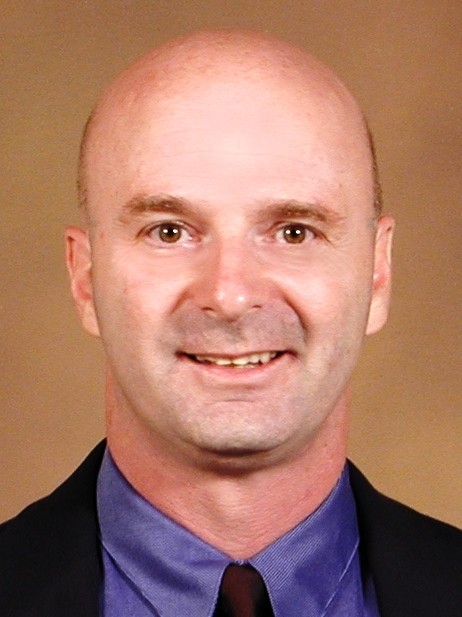


About John Martignoni
John Martignoni is the Director of the Office of Evangelization for the Diocese of Birmingham in Alabama and also the President of the Bible Christian Society. John's column, Apologetics 101, appears regularly in the diocesan newspaper, the One Voice.  If you have a question about the Catholic Faith, please send an email to: jmartignoni@bhmdiocese.org.  And check out John's free audio and written apologetics materials at: www.biblechristiansociety.com.

Wednesday, November 23, 2011

Why Latin?: Part 4 - Conclusion to John Martignoni's response to a question about the return of Latin to the Liturgy


By JOHN MARTIGNONI

Why Latin: Part 1, Part 2, Part 3 

Question:
I have been attending a Catholic Church in the diocese in which the priest and congregation sing some of the parts in Latin.  I am curious as to why the Catholic Church is bringing this back and in some parishes even saying the mass entirely in Latin.  It appears that the Church is going back to traditionalism.  How does this (Latin) entice new people to the Catholic faith?  If I were looking for a Christian faith to join and visited a parish with Latin, I would take Catholicism off my list.  I, myself, have considered looking elsewhere for a new faith because of this.  Shouldn’t the church be looking forward and seeking out modern ways to entice newcomers?  To many outsiders, the Catholic Mass is already very dry and boring with all of its prayers through Mass, let alone adding in Latin.  Please advise and help me understand the Latin importance in this modern age.    

Answer:
You are not the only person that I have seen or heard getting angry when it comes to Latin and to the Traditional Latin Mass (TLM).  But, what you need to understand, is that when the Novus Ordo Mass was introduced, and the TLM was abandoned virtually overnight, it created some deep wounds...wounds within the Body of Christ...that needed to be healed.  A lot of people felt like they had had their heart ripped out.  Many tried to adapt and adjust, but then they were almost immediately faced with a certain amount of "creativity" in the liturgy that only wounded them more deeply.

In spite of the words of Vatican II, individual priests began to tinker with the liturgy to make it more in line with their own personal opinions of what the Mass should be and with their own private vision of the "spirit of Vatican II."  Some priests would often change the wording of prayers - adding words here, taking them out there - or they would ignore the rubrics and other such liturgical abuses. Such abuses, among other things, led to a schism here and a schism there and to many people simply leaving the Church altogether.  The Body of Christ was wounded.  There were also many who did not go into schism, but were deeply wounded by these abuses, nonetheless.  And, as Scripture tells us, what affects one part of the Body affects all parts of the Body.  

The liturgy of the Church - any authentic liturgy of the Church - whether in English or in Latin, should not be a source of pain, nor a source of anger and bitterness, for anyone who calls themself a Catholic.  That is why Pope Benedict has taken steps to, in essence, reevaluate the liturgical reforms of the 60’s and 70’s in light of the Church’s ancient liturgical tradition.  And the first step in this reevaluation is to go back – back to the point where the wounds were inflicted, back to the point of rupture between the old and the new – and try to restore the connection between the two forms of liturgy.  This, he hopes, will heal wounds, promote harmony, and create an atmosphere where an authentic renewal of the liturgy may flourish.  

In a letter to the Bishops that accompanied his Motu Proprio, “Summorum Pontificum” (a document from the Pope making the Traditional Latin Mass more available to all), Pope Benedict said, “I now come to the positive reason which motivated my decision to issue this Motu Proprio…It is a matter of coming to an interior reconciliation in the heart of the Church.”

In making the TLM more available, the Pope is helping this reconciliation to occur by allowing each of us to rediscover our liturgical heritage and to participate in this liturgical “treasure,” as he has called it.  And it seems our Pope knows his business, because his actions have already led to some healing in the Body of Christ, as we have seen right here in our own diocese.  And they have led to discussions that may result in even greater healing in the Body in the future.

As I have stated previously, Latin is not necessarily my cup of tea, so I can somewhat understand where you’re coming from.  But, instead of reacting with anger and bitterness, we need to be a bit more open-minded and try to understand what the Church is doing and why.  And, we need to do our part to help promote the healing, the reconciliation, and the authentic liturgical renewal that our Pope is trying to engender.  If that means that we have to come out of our comfort zones a bit, well then, so be it.  Just look at the Cross and ask yourself if He would do any less for you.  As Archbishop Fulton Sheen used to say, “Jesus came to comfort the afflicted, and to afflict the comfortable.”  


About John Martignoni
John Martignoni is the Director of the Office of Evangelization for the Diocese of Birmingham in Alabama and also the President of the Bible Christian Society. John's column, Apologetics 101, appears regularly in the diocesan newspaper, the One Voice.  If you have a question about the Catholic Faith, please send an email to: jmartignoni@bhmdiocese.org.  And check out John's free audio and written apologetics materials at: www.biblechristiansociety.com.

Sunday, November 20, 2011

Why Latin: Part 3


BY JOHN MARTIGNONI

Question:
I have been attending a Catholic Church in the diocese in which the priest and congregation sing some of the parts in Latin. I am curious as to why the Catholic Church is bringing this back and in some parishes even saying the mass entirely in Latin. It appears that the Church is going back to traditionalism. How does this (Latin) entice new people to the Catholic faith? If I were looking for a Christian faith to join and visited a parish with Latin, I would take Catholicism off my list. I, myself, have considered looking elsewhere for a new faith because of this. Shouldn’t the church be looking forward and seeking out modern ways to entice newcomers? To many outsiders, the Catholic Mass is already very dry and boring with all of its prayers through Mass, let alone adding in Latin. Please advise and help me understand the Latin importance in this modern age.

Why Latin: Part 1, Part 2

Answer:
Having discussed in my last article the reason for the increased use of Latin in the Novus Ordo (the new Mass), I want to now address the question of the resurrection of the “traditional Latin Mass” (TLM), also known as the Extraordinary Form of the Mass. Why is the Church bringing back the TLM, or “going back to traditionalism” as you put it?

The very question itself displays the reason why. Blessed John Paul II, along with Pope Benedict, both of whom were participants in Vatican Council II, recognized that the changes in the Mass, in the liturgy, that occurred after Vatican II, went beyond what the Fathers of that Council intended. The Council Fathers wanted a reform of the liturgy or, I think it is more proper to say, they wanted an authentic renewal of the liturgy, but somehow things went a bit too far. It is apparent from reading the documents of Vatican II, that the Council Fathers wanted a renewal of the liturgy that built upon the old and which reflected continuity between the old and the new. Instead, the baby was tossed out with the bath water, so to speak.

The fact that you, as well as many others, are asking questions like this, speaks to the point – we Catholics are generally ignorant of our liturgical patrimony, our liturgical heritage. This is because the liturgical reforms of the 60’s and 70’s, which were supposed to make Catholics more aware of what is going on at the Mass, to draw Catholics into a deeper participation in the Mass and a deeper understanding of the Mass have, for the most part, failed in their purpose and intent. Ignorance of our liturgical heritage, of which the TLM is a significant part, has led to us being generally even more ignorant of the liturgy than we were before. Why do we do what we do at Mass? What is the meaning of the Mass? What are the meanings of the words, the prayers, the actions of the priest and the congregation? What is the purpose of the Mass? In large measure, Catholics generally have little to no understanding of the underlying purpose and meaning of the Mass, nor of its connection to the Old and New Testaments and to the Sacred Tradition of the Church.

I would argue that a liturgical rupture of sorts, occurred between the Traditional Latin Mass and the Novus Ordo, and that rupture has led to Catholics being less knowledgeable about the Mass and less engaged in the Mass than would have been the case if there had been greater continuity between the old and the new. If the actual words of Vatican II had been followed, I believe we would have seen a much smoother transition between the two forms of the Mass.

As I mentioned in my last article, if one actually reads the documents of Vatican II, they would see that nowhere does the Council call for the wholesale abandonment of Latin in the liturgy. In fact, it is just the opposite (Sacrosanctum Concilium, #36). Nowhere does the Council call for Gregorian chant to be abandoned. In fact, it is just the opposite: “Gregorian chant, as proper to the Roman liturgy, should be given pride of place,” (Sacrosanctum Concilium, #50). Nowhere does the Council call for individual “tinkering” with the Mass. In fact, it is just the opposite: “Therefore no other person, even if he be a priest, may add, remove, or change anything in the liturgy on his own authority,” (Sacrosanctum Concilium, #22). Nowhere does the Council call for, and I know this is a hot button issue with a lot of folks, but nowhere does the Council call for the priest to turn around and face the people rather than face God.

To quote then Cardinal Ratzinger on this, “To the ordinary churchgoer, the two most obvious effects of the liturgical reform of the Second Vatican Council seem to be the disappearance of Latin and the turning of the altars towards the people. Those who read the relevant texts will be astonished to learn that neither is in fact found in the decrees of the Council.”

Abandoning, almost overnight, the more than thousand year heritage of the Traditional Latin Mass has led to an even greater liturgical ignorance among Catholics than otherwise would have been the case and has resulted in many, such as yourself, having what seems to be a visceral reaction to that heritage and anything associated with it, and it has also left some open wounds – wounds that need to be healed. And, it has led to some liturgical “creativity” which I’m sure the Council Fathers never intended.

Next week: Healing the wounds.


About John Martignoni
John Martignoni is the Director of the Office of Evangelization for the Diocese of Birmingham in Alabama and also the President of the Bible Christian Society. John's column, Apologetics 101, appears regularly in the diocesan newspaper, the One Voice.  If you have a question about the Catholic Faith, please send an email to: jmartignoni@bhmdiocese.org.  And check out John's free audio and written apologetics materials at: www.biblechristiansociety.com.

Wednesday, November 2, 2011

Why Latin? Part Two


BY JOHN MARTIGNONI

Question:
I have been attending a Catholic Church in the diocese in which the priest and congregation sing some of the parts in Latin.  I am curious as to why the Catholic Church is bringing this back and in some parishes even saying the mass entirely in Latin.  It appears that the Church is going back to traditionalism.  How does this (Latin) entice new people to the Catholic faith?  If I were looking for a Christian faith to join and visited a parish with Latin, I would take Catholicism off my list.  I, myself, have considered looking elsewhere for a new faith because of this.  Shouldn’t the church be looking forward and seeking out modern ways to entice newcomers?  To many outsiders, the Catholic Mass is already very dry and boring with all of its prayers through Mass, let alone adding in Latin.  Please advise and help me understand the Latin importance in this modern age.    

Part II (See Part I: Is the use of Latin in the Liturgy a Turnoff?)

Answer:
Having discussed last week why being upset over an increased use of Latin in the liturgy is not a good reason to look “elsewhere for a new faith,” I want to now turn my attention to the use of Latin in the liturgy.  There are two distinct, yet related, issues here: first, the use of Latin in the Novus Ordo (the new Mass), which is the Mass we are all familiar with; second, the more frequent use of the Latin Mass itself, also known as the Extraordinary Form of the Mass, and all of the recent commotion around it.

Okay, so why Latin?  Why are we seeing more parishes use Latin in parts of the Mass, the Agnus Dei (Lamb of God), for example?  Well, the biggest reason I can think of is: because the Church tells us to.  At the Second Vatican Council, the Church said, “The use of the Latin language...is to be preserved in the Latin rites,” (Sacrosanctum Concilium, #36).  Yet, contrary to the very clear words and intent of the Council Fathers, the Latin language was quite often abandoned wholesale in the years immediately following Vatican II.  

Commenting on that situation, Bishop Slattery of Tulsa had this to say,  “...it was not a wise decision to do away with Latin in the Mass.  How that happened, I don’t know; but the fathers of the Council never intended us to drop Latin. They wanted us to hold on to it and, at the same time, to make room for the vernacular...”

But, why does the Church tell us to hang on to Latin in the liturgy?  Well, one reason is because Latin is the official language of the Church.  All Church documents are promulgated first and foremost in Latin.  The papal encyclicals - first done in Latin.  The Catechism - first done in Latin.  All documents, liturgical or otherwise - first done in Latin.  Truth be told, it is a bit of a misnomer to call the old Mass the “Latin” Mass, because the Novus Ordo, the new Mass, was first promulgated in Latin.  Which is why we are soon to get a new Mass translation, because the current English translation was not as faithful to the Latin as it could have been.  So, both the old and the new Mass can rightly be called “Latin” masses.

Another reason the Church tells us to hang on to Latin in the liturgy, is because it connects us to the past, to our traditions.  For over a thousand years our forefathers in the faith worshipped in Latin.  To banish Latin to the outer darkness is like banishing grandpa to the outer darkness because he only speaks Italian, or Polish, or whatever. The Latin language is a part of our story, a part of who we are, a part of our heritage, as Catholics.  

I mentioned last week that I am not a “big fan” of the Latin language.  That does not mean, however, that I do not respect the language.  I simply prefer English to Latin.  That is the result of an American nativistic bias more than anything else, though.  I suppose if Latin were used in some prayers on a regular basis, not just once in a blue moon, and if our missalettes had the Latin version of some of the prayers, I could grow more accustomed to the language.  You know, as Christians, I think to harbor bias that is based more on a lack of familiarity with someone or something, rather than anything else, is not really becoming of us.  I think we should try to be more tolerant and open-minded with regard to such things.


Next week...The Resurrection of the Extraordinary Form of the Mass.

About John Martignoni
John Martignoni is the Director of the Office of Evangelization for the Diocese of Birmingham in Alabama and also the President of the Bible Christian Society. John's column, Apologetics 101, appears regularly in the diocesan newspaper, the One Voice.  If you have a question about the Catholic Faith, please send an email to: jmartignoni@bhmdiocese.org.  And check out John's free audio and written apologetics materials at: www.biblechristiansociety.com.