Wednesday, December 21, 2011

Heavyweight Fight: Santa Claus vs. Saint Nicholas Should there be a battle to see who is the best symbol of Christmas spirit?


BY CHRIS TEAGUE

It would be great to see the spiritual foundations of Santa Claus….Sankt Niklaus…Saint Nicholas make a comeback in the United States.   Obviously Santa Claus has been high jacked by the commercial interests in this country and therefore he is almost seen as evil in some fundamentalist circles.   But, I think Catholics families should want to help “devolve” Santa back to who he really is.  We need to bring out the REALITY of Santa Claus, and maybe Santa could once again become a symbol of Christ not just a symbol of Christmas commercialism.    At his core Santa Claus is still St. Nicholas however we simply fail to recognize the patron saint of children beneath all the layers of commercialism our culture has placed on him.

One article on www.stnicholascenter.org put the situation nicely,
“It's been a long journey from the Fourth Century Bishop of Myra, St. Nicholas, who showed his devotion to God in extraordinary kindness and generosity to those in need, to America's jolly Santa Claus, whose largesse often supplies luxuries to the affluent. However, if you peel back the accretions, he (Santa Claus) is still Nicholas, Bishop of Myra, whose caring surprises continue to model true giving and faithfulness.”

From a practical standpoint, I don’t know if it’s possible to truly purge Santa Claus from American Culture (or if we want to) however, I do think it is possible to restore his saintly heart….give Santa Claus a much needed spiritual makeover.   Use that symbol to promote Christ and His Church, not just to promote Coke and Wal-Mart. 


Below is another gem from www.stnicholascenter.org and was written by J. Rosenthal & C. Myer.
Santa Claus belongs to childhood;
St. Nicholas models for all of life.
Santa Claus, as we know him, developed to boost Christmas sales—the commercial Christmas message;
St. Nicholas told the story of Christ and peace, goodwill toward all—the hope-filled Christmas message.
Santa Claus encourages consumption;St. Nicholas encourages compassion.
Santa Claus appears each year to be seen and heard for a short time;
St. Nicholas is part of the communion of saints, surrounding us always with prayer and example.
Santa Claus flies through the air—from the North Pole;
St. Nicholas walked the earth—caring for those in need.
Santa Claus, for some, replaces the Babe of Bethlehem;
St. Nicholas, for all, points to the Babe of Bethlehem.
Santa Claus isn't bad;
St. Nicholas is just better.

Chris Teague
Chris is the Evangelization Director for the Men of St. Joseph.


An Advent Spiritual Exercise: Lord, This Is The People Who Long To See Your Face! The Face Of Christ by Joe Castillo, SandStory® Artist


BY FR. JAMES J.M. REYNOLDS, S.T.L.

With the death of King David, whom many Israelites presumed to be the promised Messiah, God's People, Israel, waited 1,037 years for the advent, the coming of the Christ. 
   
During all that time, a small remnant of God's holy and devout People continued praying, fasting, doing penance, and expecting God's promised Messiah to come during their lifetime.  The Psalms express their yearning and prayers for a Savior: 

"Who shall ascend the mountain of the LORD? And who shall stand in his holy place?  He who has clean hands and a pure heart, who does not lift up his soul to what is false, and does not swear deceitfully.  He will receive blessing from the LORD, and vindication from the God of his salvation.  Such is the generation of those who seek him, who seek the face of the God of Jacob." (Psalm 24:3-6)
Psalm 105:4-6 also captures this yearning as it advises God's people to seek Him:
"Seek out the LORD and his might; constantly seek His Face. Recall the wondrous deeds he has done, his wonders and words of judgment, You descendants of Abraham his servant, offspring of Jacob the chosen one!"

Here's the story of a man who longs to help others to seek and recognize the Face of God, in Jesus Christ.  The man's name is Joe Castillo.

 Joe Castillo grew up in Mexico.  His love for art and storytelling was strongly influenced by his mother, who taught painting, and his father, who owned a graphic design company.   By age five he was enrolled in his mom’s art class for the neighborhood children. By eight his father was teaching him to hand letter brush script. 

Then, at fourteen, he attended an artist’s chalk talk at a Christian youth camp in Mexico. He was so moved by the drawing and the powerful message that he accepted Christ that night. For the next forty years his love of art and his passion for God would inspire and guide his life. 

After his father’s death in 1963, the Castillo Family moved back to the US. 
Joe finished high school, studied at the Ringling School of Art in Sarasota and enrolled at Florida Bible College, where he received a Bachelor’s degree in Bible. 

Joe developed a love for writing, teaching and using his artwork for telling stories.  He became a regular speaker at youth camps and churches. 

Joe created his own advertising firm, and worked in that field for twenty years.  But, during the entire time, Joe entertained and captivated thousands of audiences -- in both English and Spanish -- by telling and drawing stories that inspire, motivate and touch the heart. 

After eighteen years in advertising and the loss of his wife of twenty-six years to breast cancer, he sold his ad agency, went back to school and graduated from Asbury Seminary. 

His profound love of teaching the scriptures inspired him to illustrate what he was learning in a new way. These illustrations attempted to present the Bible in an intricate story-form that grew out of the Biblical passages.  


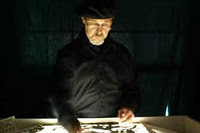
His latest adventure in storytelling is something Joe calls SandStory®.  

Drawing in sand on a light table, he is able to create powerful, fluid illustrations for large audiences with an overhead video camera projected on a large screen. 

His presentations have been seen by thousands of people leaving them with a sense of awe. 

He has created performances for CBS, NBC, BBC, TED, over thirty Fortune Five hundred companies, Kings, presidents and dignitaries in more than 18 countries around the globe. 


Joe Castillo without question is the top SandStory artist in the world today! 

Here is an excerpt from a blog for and about illustrators, called Mark Armstrong, Illustration.   In this excerpt, entitled, Joe Castillo’s Face Of Christ, Mark Armstrong tells us:

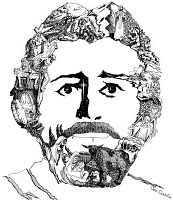
A friend of mine sent me a copy of  The Face of Christ by Joe Castillo. I was enormously impressed. As you can see, the artist has incorporated major events from Christ’s life and ministry into the drawing, mostly in the beard and hair.
The rolled away stone of the empty tomb corresponds nicely to where the ear would be, and the stars in the eyes provide a sense of scale for the Star of Bethlehem, which is tucked into the shadow of the nose. I think my favorite touch is using the Sea of Galilee and its mountain backdrop for the right eyebrow.   
    
Here is Joe’s portrait of Our Lord, called, The Face Of Christ.  Look closely.  
    
There are several smaller drawings which comprise the portrait of the Lord’s Face. 
    
These smaller drawings tell the whole story of Our Lord Jesus’ life.
    
In case you have trouble recognizing them, here’s the portrait done up with the references to the events of Christ’s life, death, and resurrection (taken from Mark Armstrong, Illustration, who based it on the references given at this tribute site: http://jerryjeffries.net/FaceOfChrist.html):


Here's an easy and profitable Advent spiritual exercise, using Joe's The Face Of Christ:  

Print out the Face above.  Sit and look into this Face for a little while.  It can help you focus on "The Reason" for the Christmas Season. And it can help you to make the connections between all of the major events in Our Lord Jesus Christ's thirty-three years on earth with us.  


In The Book Of Exodus (33:18-33), God reveals to us through Moses, that no mere mortal may see God's Face directly. We would not be able to survive the experience of seeing absolute goodness, absolute truth, and absolute holiness.  Not understanding this yet, Moses presses God for a glimpse of Him:

Then Moses said, “Please let me see your glory!”  The LORD answered: I will make all my goodness pass before you, and I will proclaim my name, “LORD,” before you; I who show favor to whom I will, I who grant mercy to whom I will.  But you cannot see my face, for no one can see me and live."  "Here," continued the LORD, "is a place near me where you shall station yourself on the rock.  When my glory passes I will set you in the cleft of the rock and will cover you with my hand until I have passed by.  Then I will remove my hand, so that you may see my back; but my face may not be seen."

With the coming of God's Son, God-in-Human-Flesh, Jesus, mortal men have finally seen the Face of God!  And lived!  And even more than simply surviving it, we see Christ's Face and He leads us into eternal life with Him!

As you study Joe Castillo's  The Face Of Christ above, remember:

Every event depicted in this Face was accomplished for you personally -- and for all of us!  

Try reading the Scripture Passages indicated for each event. And allow yourself to pray to Our Lord, and ask Him to return, to come again, and to eternally establish His Heavenly Kingdom here on earth.

God bless you!

Fr. James J.M. Reynolds
Reverend Father James J.M. Reynolds, STL, serves as the chaplain of the Men of St. Joseph chapter, Diocese of Rockville Centre. He writes his own blog at www.catholicjediacademy.com.

Monday, December 12, 2011

David O'Brien: You Can Come Home for Christmas


BY DAVID O'BRIEN

I once spoke at a parish about God’s loving mercy. My main point was that there is no sin too heinous, no fault too great as to permanently cut you off from God’s inexhaustible compassion and forgiveness.

After the talk, a disheveled man in his 50’s approached me to talk. I noticed his ratty clothes and his unkempt appearance. But what leapt out at me more than anything was the pungent odor emitting from him, a sickening combination of sweat, bad breath, booze and urine.

He explained that he had been brought up Catholic but that his addiction to alcohol left him in his current state. He admitted, "I rarely come here because I don’t belong with these good people." Then he pointed to the Deacon in the front of the church and told me: "That is my brother."

I could see the sadness and self-hatred in his eyes. "I don’t even feel worthy to be in this church. I’m not like my brother and all these people," he confessed.

"You said up there that God loves everyone and will forgive anything," he recounted to me, leading up to the heart wrenching question I knew was coming. "Do you think He still loves me? I mean, after everything I’ve done. Do you think He could still forgive me?"

Fighting back my tears, for I knew this man was one of Jesus’ lost sheep (Lk 15:4-7), I told him that God loved him more than ever and always would. "You are still that little baby boy that He held in His arms the day you were born. You will always be His precious child," I assured him.

I could tell that this man doubted my words and despaired of God’s love, so I prayed with him and encouraged him to unload his guilt in confession. I hope he found his way back to the Lord and that the people in his parish welcomed him home with open arms.

A few months ago I heard from another searching person who had been inactive in her Catholic faith for some 25 years. Although she hadn’t read The Catholic Week in a while, something caused her to open a recent issue and she read my column. Whatever she read inspired her to email me and ask me how she might begin her return to the Church.

I found out where she lived and connected her to Becky Goff, a parishioner near her who had a heart for returning Catholics.

On October 28 this email popped up: "It started with you and your column. Thank you. I went to confession this week and asked Becky to come with me. Fr. McKenna was nice and very patient. This has been very emotional for me but I know I am on the right path. Becky met me at Mass the following day and we had communion together. Thank you again from the bottom of my heart."

In both these cases, it didn’t take much for me to extend an invitation to these people to reconnect with God and the Church. Likewise, for the people in your life who are struggling to find where they fi t with our Catholic community. Could you extend an invitation to them as we approach Christmas?

To make it easier, just pass along this website www.catholicscomehome.org. It includes some commercials that will air on TV across the country during Advent. They are excellent.

Last night I visited my neighbors and told them about the commercials. This morning I opened my email to find that they had sent the website to all their contacts and posted it on their Facebook pages. Easy. Invitational. Helpful. People already responded to my neighbors about how great the commercials are and how they will be sending them to other Catholics they know.

St. Paul told us that our job is to plant seeds and allow God to do the rest. (1 Cor 3:6) We never know what is going on in the hearts of other people. Maybe they are waiting for a simple invitation to come home to the Catholic Church this Christmas.

Remember, Jesus said that there will be more rejoicing in heaven over one lost sheep who is found than over the 99 who never left. (Lk 15:7) Why not give God a reason to throw a party this Christmas?

About David O’Brien

David O’Brien is the Associate Director of Religious Education for Lay Ministry for the Archdiocese of Mobile. His column, Everyday Faith, appears regularly in the archdiocesan newspaper, the Catholic Week. Email David at dobrien@mobilearchdiocese.org.

Tuesday, December 6, 2011

Allen Hunt: A Christmas reminder from my friend, Albert.

BY ALLEN HUNT


Merry Christmas! For my final blog post of 2011, allow me to give you a Christmas reminder from my special friend, Albert, who shared his favorite memory of Christmas past, as part of a tradition we had. Albert was a leader, solid in every way. I loved that man. 

He grew up poor, not different from anyone else at the time. His parents were sharecroppers, and hard work defined their existence. As the youngest child, Albert's older siblings cared for him a lot. He got 5 cents each Saturday to walk to town, see a movie or to get ice cream. He could not afford both. 

Each year at Christmas, he wished for the same gift - a bicycle. Each year it did not come. Instead, he always received the same gift - 2 oranges, a banana and an apple. When Albert was 9, he again wished to Santa for a bike. Albert asked his mother, and prayed to God, "Please bring me a bike." That Christmas, he woke up - and discovered, yet again, no bike had arrived. Just the same basket of 2 oranges, a banana, and an apple.

As lunch approached, his older sister, Ruth, a mill worker in the cotton mill in town came walking in the house. She worked hard to scrounge together enough to feed her own three kids. 

After Christmas lunch, Ruth said, "Albert, I brought you my present." Albert quickly ran outside to see - and there it was - a new red bicycle - salvation had come to a 9 year old boy! 

That bike meant something to Albert. It meant he had finally received what he had been hoping for for years. It also meant he had a sister who loved him immensely. Best of all, it meant someone really, really cared. So Albert did what any boy would do, he slept with his bike. For a whole year! 

May one of your gifts remind you that there is Someone who loves you immensely. Someone who really, really cares. 


About Allen Hunt
Allen Hunt is a former Senior Pastor of an evangelical mega-church. He became Catholic in 2008 and now partners with Matthew Kelly to serve as the Vice-President for Strategy and Content at the Dynamic Catholic Institute. Allen is a speaker, writer, and radio host on News Talk WSB in Atlanta. He is the author of Confessions of a Mega-Church Pastor: How I Discovered the Hidden Treasures of the Catholic Church.

Martignoni: Should Priests Face the Altar at Mass?


BY JOHN MARTIGNONI

Question:
You seem to be saying in your last few articles that the Church got it wrong when it turned the altars around to face the people.  I do not, however, wish to make an unwarranted assumption and so I’ll just ask: Do you believe the Church was wrong to turn the altars to face the people and are you advocating for a return to the old way with the altar facing the tabernacle?

Answer:
Not trying to be elusive here, but those are the wrong questions.  The main point of these articles has not been what I believe or what I would or would not like to see.  The whole reason for these articles was because of the question I received from someone who was feeling a bit put out by the use of Latin in the liturgy and the new life given to the Traditional Latin Mass.  Her question seemed to indicate a fear of, and even anger towards, anything Latin.  I have to be honest and say that I am always somewhat stunned when I see that kind of visceral reaction directed towards the liturgy – any authentic liturgy - whether it be directed toward the Traditional Latin liturgy, or it be directed to the new liturgy (the Novus Ordo).  So, what I attempted to do with my articles was to educate folks as to why we are seeing and hearing more about Latin and the Latin Mass these days.  

And, the reason why we are seeing and hearing more about Latin and the Latin Mass, is because Pope Benedict is making a deliberate attempt to bring about what he believes is a much needed reconciliation between the pre- and post-Vatican II liturgies.  As he said in a letter to the Bishops regarding his reasoning for wanting the Traditional Latin Mass to be more available, “I now come to the positive reason which motivated my decision to issue this Motu Proprio…It is a matter of coming to an interior reconciliation in the heart of the Church.”

The reason we are in need of a liturgical reconciliation, according to Pope Benedict, is that there was a bit of a disconnect between the intent of Vatican II and the implementation of Vatican II, “Many people who clearly accepted the binding character of the Second Vatican Council, and were faithful to the Pope and the Bishops, nonetheless also desired to recover the form of the sacred liturgy that was dear to them. This occurred above all because in many places celebrations were not faithful to the prescriptions of the new Missal, but the latter actually was understood as authorizing or even requiring creativity, which frequently led to deformations of the liturgy which were hard to bear.”

These deformations of the liturgy that the Pope speaks of, caused great wounds within the Church.  The Pope is trying to heal those wounds by slowly bringing the liturgy back to what he believes was intended after Vatican II.  He is moving slowly, it seems, in order to first educate the faithful and to allow for reasoned dialogue on these matters.  Too often in the past, discussion of all things liturgical has resulted in passionate and sometimes heated exchanges, with each side putting labels on the other, that tended to deepen the wounds rather than heal them.  

Our Holy Father is calling for a new paradigm for the discussion of such matters: “The Congregation's response should thus make for a new, more relaxed discussion, in which we can search for the best ways of putting into practice the mystery of salvation. The quest is to be achieved, not by condemning one another, but by carefully listening to each other and, even more importantly, listening to the internal guidance of the liturgy itself. The labelling of positions as 'preconciliar', 'reactionary', and 'conservative', or as 'progressive' and 'alien to the faith' achieves nothing; what is needed is a new mutual openness in the search for the best realization of the memorial of Christ."

So, my last few articles have, I hope in at least some small way, served to educate the faithful as to what is going on in regards to the liturgy of late, and why. I also hope that they will help to stimulate more discussion, in a reasoned and respectful manner, regarding the liturgy, so that the reconciliation Pope Benedict desires can continue to progress.  The more educated we are on the liturgy, which is the source and summit of all that we are as Catholics, the better it will be for each of us individually, for our parishes, and for the Church as a whole.  

Am I advocating for the altar to be turned back around to face the tabernacle rather than the people?  Let’s just say that I am advocating for what Pope Benedict is advocating for – interior reconciliation within the heart of the Church.


About John Martignoni
John Martignoni is the Director of the Office of Evangelization for the Diocese of Birmingham in Alabama and also the President of the Bible Christian Society. John's column, Apologetics 101, appears regularly in the diocesan newspaper, the One Voice.  If you have a question about the Catholic Faith, please send an email to: jmartignoni@bhmdiocese.org.  And check out John's free audio and written apologetics materials at: www.biblechristiansociety.com.

Tuesday, November 29, 2011

Why Do We Eat So Much on Thanksgiving?


BY DAVID O’BRIEN

Have you ever noticed that we spend much of our lives pursuing some sort of goal or dream?

When we are younger, we long to be like our older brother or sister, or the older kids in school. We can’t wait until we make it to 8th grade, senior year or make the varsity team.

Later we hope to get into college, land that first job, prove ourselves at work, get our first new car, apartment, house, find that special guy or girl, and finally get married and have children.

As the years go by, our dreams shift. We work to give our kids the best we can, help them succeed and set them up for a better life than we had.

For ourselves, we strive to do well in our careers, maybe find that dream home, be respected by our peers, set ourselves up for retirement and stay relatively healthy.

Some of these goals are realized, some are not.

But even when we achieve them, as great as they are, there seems to be a certain hollowness to them. We ask: "Is that it? Is there nothing more?"

We may spend years pursuing a goal but once we achieve it, we want more. We don’t just plop down on our Lazyboy in the living room and spend the rest of lives reveling in that moment when we made the honor roll in 11th grade.

It is as if we are a bag of walking desires. We are never satisfied.

In all of creation we are unique in this way. I’m never met a dog that wanted to be a cow or a tree that longed to be a butterfly.

But every person I’ve ever known, including myself, wants to be more, know more, do more and have more. What is happening here? Is there flaw in the design of humanity?

Think about what happens every year at Thanksgiving. We load up our plates as if we are creating a model of Mt. Everest . Then we proceed to shovel the equivalent of four full meals down our gullet. The clothes we dressed in that morning begin to constrict around our waists but we still go back for that last piece of turkey and just a little more dressing, please.

Finally, at the brink of a gastronomical catastrophe, we waddle away from the table uttering a solemn oath: "I will never eat again."

But somehow, just one football game and a nap later, we are back in the refrigerator looking for that piece of pie.

We are never permanently satisfied. We always want more.

The marketers on Madison Avenue realize this about us and gear all their advertising to prey upon our unremitting sense of dissatisfaction-try this, buy that, upgrade, you deserve it, isn’t it time, act now.

So we buy, upgrade and indulge but those things don’t satisfy either. What is our problem?

Many preachers, spiritual writers and church people see this unrelenting human desire for more as the source of much of our sin. They direct us to suppress our desires and reign in that urge for more.

St. Augustine disagrees. He says that God places within us this insatiable desire so that eventually we will find our way to Him. In other words, when we get tired of seeking satisfaction and placing our hopes in finite, passing things, eventually we will turn to the Lord, who alone can totally fill our hunger for more and who never is used up.

With God, there is always more and it is always better.

We are made to long for more than this world can ever offer because we are built for eternity. Our souls are hardwired for the infinite goodness that is God. How could anything-any goal, any accomplishment, any success, any material possession, any relationship- ever satisfy a heart that yearns for communion with the creator of all that is? No wonder we are never fulfilled in this life.

So don’t kill that recklessness within you. Don’t squelch that desire for the best, the most, the ultimate that burns in your gut. That is God’s Spirit driving you to Him, the only one who can really meet our every need and satisfy our every desire.

About David O’Brien

David O’Brien is the Associate Director of Religious Education for Lay Ministry for the Archdiocese of Mobile. His column, Everyday Faith, appears regularly in the archdiocesan newspaper, the Catholic Week. Email David at dobrien@mobilearchdiocese.org.

Thursday, November 24, 2011

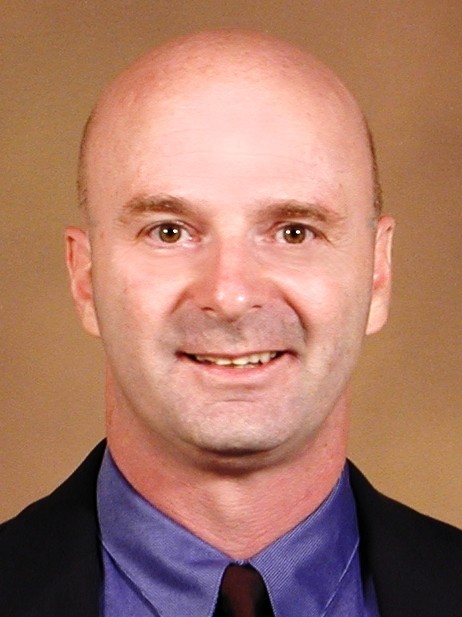
Baltimore MOSJ chapter leader and wife volunteer time to aid Philippines

Doug and Cita Brown volunteer in the Philippines
[Note: Doug Brown is a leader of the Men of St. Joseph chapter at St. Ursula, in Baltimore. Reprinted from Catholic Review, official newspaper of the Archdiocese of Baltimore.]


BY LISA HARLOW 

While Cita Brown calls the United States home, she has not forgotten the poorest of the poor in her native country, the Philippines. The parishioner of St. Ursula, Parkville, Maryland and her husband, Douglas, are actively involved with FAPI, the Foundation for Aid to the Philippines Inc. 


FAPI aims to reduce poverty and promote self-sufficiency in the Philippines.

Founded in 1997 and based in Cockeysville, FAPI has provided grants for medical care, livelihood and nutrition projects, housing and education. Medical missions to the Philippines are vital, as proper medical care is often unavailable to the poor due to the country’s healthcare system, which requires patients to pay for their own medicine and medical supplies.

Cita, a registered nurse who works in the operating room at Union Memorial Hospital in Baltimore, went on her first FAPI medical mission to the Philippines in 2009. Douglas accompanied her on her second mission there, in late January.

She was among a team of approximately 40 medical professionals, which included eight or nine surgeons. It took the group two days to travel to Leyte, a rural area about an hour’s flight from Manila.

FAPI purchased all of its supplies – vitamins, antibiotics and surgical equipment – totaling 50 boxes. Board member and surgeon Alberto del Corro, and his wife, FAPI secretary Karen del Corro, a registered nurse, packed and shipped the supplies to the public hospital in Leyte.

In five days, the FAPI team saw more than 3,000 patients in the hospital’s outpatient clinic.

“The townspeople knew about the mission months in advance,” Douglas said. “They traveled for days to get to town – some even traveled for a week, by foot and by boat. When we arrived, we had 500 people signed up and pre-screened for surgery. Over five days, they handled 75 major surgeries.”

The surgeons also worked on approximately 200 minor cases, involving cleft lips and palettes, hernias, tumors and OB/GYN issues.

Because Douglas is a career consultant and not a medical professional, he handled non-medical tasks.

While the hospital staff was friendly and helpful, the conditions of the building were not acceptable by American standards.

“It was hot and unsanitary,” Douglas said. “Patients with major problems had to wait in the hallways for days. There was an orthopedic patient, his foot had been crushed. It’s really a sad situation. They can’t get medical care. If you don’t have the money, you just can’t get treated there.”

According to FAPI, more than 60 percent of the 80 million Filipinos live below the poverty level. In the metropolitan Manila area alone, unemployment is more than 30 percent.

Cita recalls another late-arriving patient.

“We were packed up and ready to go,” she said. “There was a lady who needed a C-section. The lady had been having contractions since the previous day, but she had no money to buy the IV medicines or supplies to do the surgery.

“We got to that lady just in time. She needed a blood transfusion. Her blood pressure had dropped tremendously. The baby was OK. I was praying in the OR for God to please save them. It was a real humbling experience.”

Leftover medicines, instruments and medical supplies were donated to the public hospital.

“This was my first trip with FAPI and my second missionary trip,” Douglass said. “On both trips I truly felt that I received more than I gave. The people we served were so humble in the midst of extreme, desperate circumstances.”

FAPI is already planning for its next medical mission, in November 2012.

“It takes time to raise money,” Cita said. “Most of the volunteers pay their own way, and many supplies have to be purchased. The government of the Philippines has to approve everything, and there are certain requirements for the people going on the trip. They go to a different area every time, finding the neediest towns.

“This is a real grassroots effort.”

For more information about FAPI, visit fapi.org.