Showing posts with label Aquinas. Show all posts

Thursday, January 26, 2012

Catechism 101: Aquinas - proof from governance

BY PAT ARENSBERG


“You spread out the heavens like a tent; you raised your palace upon the waters.  You make the clouds your chariot; you travel on the wings of the wind….You fixed the earth on its foundation, …”  -Psalm 104:2-5

Congratulations!  You made it to Aquinas’ fifth and final proof or demonstration that there must be a God.  This one may be the most intuitive of them all.

Aquinas argues that the complexity of the universe would not be possible unless there were some intelligent designer.  (Please do not confuse this with the modern rejection of the possibility of biological evolution that is often referred to as “Intelligent design”)

Think of it this way.  If you were walking down along a remote beach and you found a watch, would you assume that it was the product of random forces of nature, or would you immediately know that some intelligent being made it?  The complexity of the watch and the fact that it acts toward a specific purpose or end argues for a watchmaker.
 
We, and the universe for that matter, are so much more complex that a watch!  Think about the complex things your body is doing right this very second.  Your digestive tract is working on breakfast, you are filtering waste from the blood, you are respirating and oxygenating all of your cells, not to mention what your eyes and brain are doing.  Wow!  You are pretty cool and complex.
This proof does not mean to imply that God has made the universe and now is just letting it run like the watchmaker does.  That is called “deism” and we reject that idea.  Imagine a watchmaker who so loved his creation that he was willing to become a part of that watch!  This is our God.
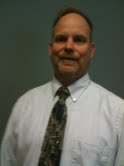


About Pat Arensberg
Patrick Arensberg is the Director of Religious Education for the Archdiocese of Mobile. Previously, he taught for 17 years at McGill-Toolen Catholic High School, where he served as Chairman of the Theology Department. He attended the Gregorian University in Rome and holds an M.A. in Theology from Notre Dame Seminary in New Orleans. He is married to Connie and they live in Mobile with their 5 children.

Wednesday, January 25, 2012

Catechism 101: Aquinas - proof from gradation

“From Zion God shines forth, perfect in beauty.”  -Psalm 50:2

Thanks for reading these brief blogs.  You know the plan is to expose you to virtually the entire Catechism of the Catholic Church over about a one year period.  Just 5 minutes a day of this reading will get you there!

We are looking at St. Thomas Aquinas’ demonstrations from natural reason that there must be a God.  We arrive today at his fourth demonstration from “Gradation.”  He notices that we speak of things as being more or less beautiful and more or less true and more or less good.  He then argues that for this to be the case there must be such a thing as goodness, beauty and truth.  He argues that the being who contains all of these qualities in their fullness we call God (or perhaps the being who is goodness, beauty and truth).  This warrants some reflection and should bring up a question too.

If you follow Aquinas you might be wondering if this proof unwittingly proves that there are two gods (one good, true and beautiful and one bad, false and ugly).  Remember that evil is not so much a thing as the absence of good.  Evil is actually less real than good;  just like darkness is not really a thing by itself since it is just the absence of light.  In fact when you get darkness and light together you don’t get anything but light.  Light dispels the darkness.  Evil is not evil per se, it is the absence of good.

So one of the things that blows my mind is that, strictly speaking, God does not love me.  God IS love with me.  Love is not something God does; it is something he is.  This means he can never stop loving.  It also means that anytime I love God is somehow present there.


About Pat Arensberg
Patrick Arensberg is the Director of Religious Education for the Archdiocese of Mobile. Previously, he taught for 17 years at McGill-Toolen Catholic High School, where he served as Chairman of the Theology Department. He attended the Gregorian University in Rome and holds an M.A. in Theology from Notre Dame Seminary in New Orleans. He is married to Connie and they live in Mobile with their 5 children.

Tuesday, January 24, 2012

Catechism 101: Aquinas - proof from possibility and necessity

BY PAT ARENSBERG

“But,” said Moses to God, “when I go to the Israelites and say to them, ‘The God of your fathers has sent me to you,’ if they ask me, ‘What is his name?’ what am I to tell them?”  God replied, “I am who am.”  Then he added, “…I AM sent me to you.”  Exodus 3:14


As we continue to look for ways, using natural reason alone, to arrive at the conclusion that God exists we not turn our attention to St. Thomas Aquinas’ third demonstration, “From possibility and necessity.”  This is likely the most difficult for me to explain in this brief format, so I would like to begin with the conclusion.  Aquinas arrives at the conclusion (again using natural reason) that there must be a being whose existence is not just possible, but in fact necessary.  That being is God.

You see we all have an existence that is possible but not necessary (so does everything in the universe).  We know it is possible for us to exist because we do, and we know that it is not necessary for us to exist because there was a time when we did not.  Everything in the universe is in the same existential boat, namely having an existence that is possible but not necessary.  Aquinas argues that there must be something that has a necessary existence otherwise the universe would not be here.  He says that everything would have fallen into the state of non-existence at the same time and that state would have continued forever.

This is probably my least favorite demonstration in terms of its power to convince, but it is my favorite in terms of insights into God.  He revealed himself as “I am Who am.”  In essence he told Moses 2,700 years before Aquinas, “I am existence; I am the one who must exist.”  I think that is kind of cool.


About Pat Arensberg
Patrick Arensberg is the Director of Religious Education for the Archdiocese of Mobile. Previously, he taught for 17 years at McGill-Toolen Catholic High School, where he served as Chairman of the Theology Department. He attended the Gregorian University in Rome and holds an M.A. in Theology from Notre Dame Seminary in New Orleans. He is married to Connie and they live in Mobile with their 5 children.

Monday, January 23, 2012

Catechism 101: Aquinas - proof from efficient cause - what's that mean?

BY PAT ARENSBERG


“Created in God’s image and called to know and love him, the person who seeks God discovers certain ways of coming to know him.  These are also called proofs for the existence of God…”  CCC #31

We are looking at St. Thomas Aquinas’ proofs (or demonstrations might be a better label) for the existence of God.  Friday, we saw his first proof from motion.  The demonstration that we will look at today shares some of the same logic but is based on what “efficient cause.”

Aquinas notes that things exist (profound, right?).  He further notices that everything that does exist is caused by something else (he actually notices that most things have many “secondary causes” for their existence, but one cause is the central or “efficient cause”).  He then observes that as he looks back for the ultimate cause of existence he cannot go back forever (can’t regress infinitely).  Eventually, we must posit a being who caused itself to be (an uncaused cause).  This being we call God.

Looks a lot like yesterday’s and I think both can be boiled down into modern language something like this.  “Well, ok so where did all that stuff that banged in the big bang come from?”  The point is that scientific explanation is great and valuable but will always have a hole at “the beginning.”  Science studies matter, and it cannot, but definition, define how matter was created out of nothing by a spiritual being.  Eventually science hits a wall.


About Pat Arensberg
Patrick Arensberg is the Director of Religious Education for the Archdiocese of Mobile. Previously, he taught for 17 years at McGill-Toolen Catholic High School, where he served as Chairman of the Theology Department. He attended the Gregorian University in Rome and holds an M.A. in Theology from Notre Dame Seminary in New Orleans. He is married to Connie and they live in Mobile with their 5 children.

Friday, January 20, 2012

Catechism 101: Aquinas and the first demonstration

BY PAT ARENSBERG

1-20-12
“I answer that the existence of God can be [demonstrated] in five ways.”  -St. Thomas Aquinas Summa Theologica First Part, Question 2 Article #3


God respects our freedom and never compels us to belief in him.  Nonetheless, there are powerful demonstrations of his existence.  St. Thomas Aquinas, the preeminent 12 century theologian and Doctor of the Church, articulated five proofs, or demonstrations for the existence of God.  I will describe each of these over the next few days.  They are not proofs in the sense that they will compel belief; that would violate our freedom and make love impossible.

His first proof is “From Motion.”  Aquinas argues that everything in the universe is in motion (or has moved from potentially existing to actually existing).  He further notes that nothing moves (from potency to actuality or moves physically) without being moved by something else that is already in motion or actualized.  As we trace back searching for the ultimate cause of motion we realize that we can’t go backwards forever (we cannot regress infinitely).  Eventually we must posit a being (we must admit that there is a being) who moved and became actual without being moved on by anything else (an unmoved mover).  This being is what or who we call God.
Remember, that Aquinas believes in a personal God who is our Father and became Incarnate, but at this point he is simply trying to prove that there is a God.  He is not, in this section, trying to explain who God is beyond that.


About Pat Arensberg
Patrick Arensberg is the Director of Religious Education for the Archdiocese of Mobile. Previously, he taught for 17 years at McGill-Toolen Catholic High School, where he served as Chairman of the Theology Department. He attended the Gregorian University in Rome and holds an M.A. in Theology from Notre Dame Seminary in New Orleans. He is married to Connie and they live in Mobile with their 5 children.