Wednesday, January 11, 2012

O'Brien: Is this what we’re supposed to be doing?


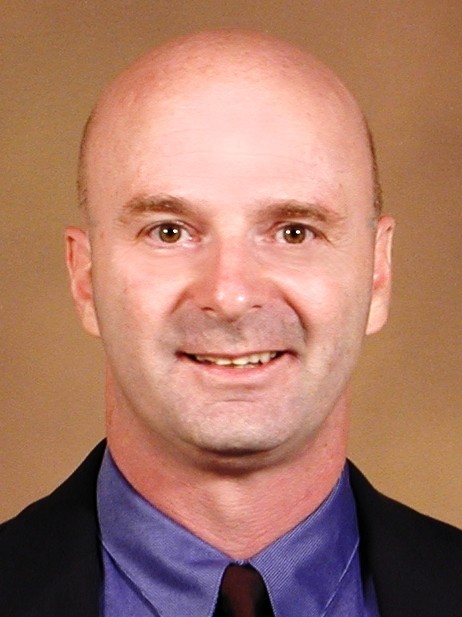
BY DAVID O'BRIEN

Ok, so I go to work, come home, go to work, come home. Drive the kids to practice for the Christmas play. Kiss my wife as she rushes out to the next thing. Catch her words as she flies down the driveway. Evidently, there is a list for me on the kitchen counter.

The dishes are still in the sink from this morning. Before we know it, the time has come to pick up the kids. A late dinner, a little homework, carry the baby while my wife punches out a priority email and then we are into the bedtime routine.

Even after the kids are down, three hours of work lie before us. We hope to be in bed by midnight.

The thing that bothers me is that I know it all starts again tomorrow. In fact, the weeks, months and years are blurring together these days, obscured by the onslaught of daily tasks that never get conquered but instead seem to breed somewhere in the back room of our house.

Wasn’t it just yesterday that we were on our honeymoon, the world lie before us and we were dreaming about all the great things we could accomplish together? Now, married with four children, a mortgage, leaky faucets, a house begging for a paint job, stacks of administrative work piled up on my desk, I wonder: "Is this what we’re supposed to be doing with our lives?"

Already, we see the window closing as we reach our forties. Where did our youth go? The years are flying by so fast. Did we miss something along the way?

My sisters are farther down the road than us. They have children in high school and college. When we talk, they are asking the same questions. We commiserate in our shared search for answers and meaning in the midst of the daily doings of family life.

This morning I awoke at 3:00 a.m. My daughter’s baptism is scheduled for 10:30 a.m. The list of to-do’s is racing through my mind, disturbing my sleep. I try to calm my thoughts, breathing deeply, fi xing my focus on the Lord, offering my little girl into His loving arms. I feel the tightness in my hands recede and I slide into a half conscious state, somewhere between distraction, peaceful slumber and meditation.

My mind recounts the story my wife told me earlier in the week. She is holding our baby girl who is playing Jesus in a live Nativity scene in front of our church. A man approaches my wife. Not a parishioner, he appears shy, awkwardly slow and a little bit off. She is cautious at first but notices the innocence in his eyes. He asks her in all sincerity: "Can I see the baby Jesus?" She watches in awe as his face beams with profound joy, staring at the holy child, our daughter.

At the baptism, I look around at the room full of friends, parents, grandparents, godparents, children, children, children and a baby dressed in a white gown. The dress is made of fabric given to us by a women we know who lives on a garbage dump outside of Mexico City. She presented us with the material as a gift for sponsoring her daughter, who died of multiple sclerosis. Somehow, I imagine her questions about the meaning of life are different than mine. For her, all of life is a gift and she is grateful, even on a garbage dump, even though her daughter died. I pray that her spirit characterizes our family in the years ahead.

On the baptismal font sits the bowl that carried the Eucharistic bread at our wedding. A friend made it for us as a wedding gift. It has been the basin for the baptisms of each of our children.

The priest prays over us that we would be good parents to our daughter and help her know the Lord’s love for her. Surrounded by God’s grace, we feel more like lottery winners at that moment than the overwrought couple we thought we were a week ago.

At the little reception in the parish hall, my wife’s mother and brother sing "O Holy Night" followed by a trio of spiritual songs performed by my older kids, songs they learned at all those play rehearsals I drove them to night after night. They sit on a table and belt out in full voice: "I’d rather have Jesus than silver and gold." My sisters wipe the tears from their eyes and smile at me.

I’m not sure what I thought we were supposed to be doing with our lives but when I pay attention to what we are doing, I’m tempted to say these ordinary, mundane, every day, monotonous demanding elements of family life might just be holy.

I doubt the history books and the New York Times will seek to immortalize 99.9% of our lives. But God is paying attention and I’m starting to think God is doing something extraordinary, even if we are too distracted, busy and preoccupied to notice most of the time.

About David O’Brien

David O’Brien is the Associate Director of Religious Education for Lay Ministry for the Archdiocese of Mobile. His column, Everyday Faith, appears regularly in the archdiocesan newspaper, the Catholic Week. Email David at dobrien@mobilearchdiocese.org.

Friday, January 6, 2012

Martignoni: The Catholic Church killed millions? Is that true?

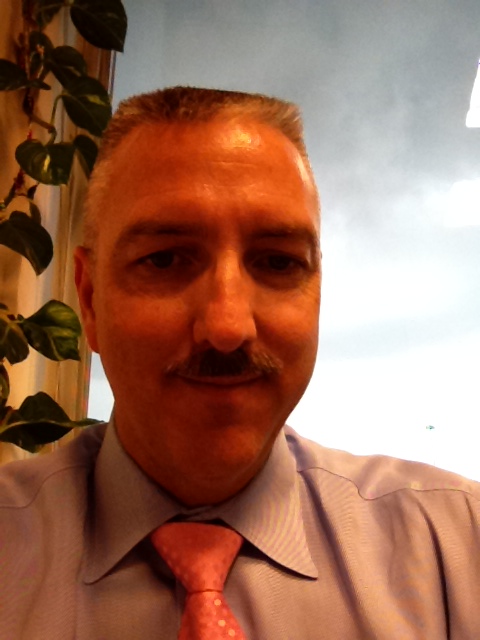
BY JOHN MARTIGNONI

Question:
My brother, who left the Church several years ago, has recently started accusing the Catholic Church of genocide because of what the Church did during the Inquisition.  He said the Church killed millions of people during the Inquisition.  Is that true?

Answer:
I have had people say to me that the Catholic Church killed as many as 63 million people during the Inquisition.  The problem is, the entire population of Europe at any given time during the 15th and 16th centuries, when the Inquisition was the most active, is estimated to have been around 30-35 million people.  So, did the Inquisition kill the entire population of Europe twice over?  I don’t think so.   

There are many myths about the Inquisition, particularly the Spanish Inquisition, that got started with some very good Protestant propaganda written in the late 16th century when things between Catholics and Protestants were not very pleasant, to say the least, and relations between Protestant England and Catholic Spain were rather hostile.  Unfortunately, those myths have been perpetuated for hundreds of years down to our day and age, so that the average person, including many Catholics, swallow them hook, line, and sinker.  

Now, I don’t want to whitewash what occurred during the Inquisition, since in any such endeavor that involves human beings there will be mistakes made, sins committed, and evils perpetrated, but I do want to set some of the facts straight so that the Inquisition can be properly judged within its historical context.

Not too long ago, I believe it was in the 90’s, the Vatican released literally thousands of records pertaining to Inquisition cases that had never before been studied by scholars.  Those historical documents have changed the view of many in regards to the Inquisition.  For example, when most people think of the Inquisition, they think of torture and executions.  The Vatican records, however, which are the actual records of the court cases that were made at the time, show that torture was very seldom used.  Compared with the frequency of torture in the civil courts of those centuries, the Inquisition courts were a few hundred years ahead of their time.  

Over the approximately 450 year history of the Inquisition, in several different countries, it is now estimated that somewhere around 5000 people who went through Inquisition courts wound up being executed by the civil authorities.  A much lower number than most people have in their minds when they think of the Inquisition, and certainly not 63 million.  One might say, “Fine, but 5000 people killed for heresy is 5000 too many.”  Indeed, but you need to take into account the times they were in.  Heresy was not just a religious crime, it was usually a crime against the state as well, and that was true throughout Europe – Catholic and Protestant Europe.  Just think of all the Catholic martyrs there were in England, for example.  Heresy and treason were pretty much considered one and the same crime.  

Also, the Inquisition courts were superior to the civil courts of the time in terms of the burden of proof that was required to convict and in terms of the legal representation that was given to the accused.  The prisons of the Inquisition were also far more humane than the prisons of the secular authorities.  Scholars have found instances of prisoners in secular criminal courts blaspheming in order to get into the Inquisition prison.  

Again, all of this is not to say that there were no wrongs done during the Inquisition, but rather to make sure the history of the Inquisition is accurate and is considered in its proper context.  Were people put to death for heresy in the Inquisition courts?  Yes.  But, in England at the time, you could be put to death for things such as damaging the shrubbery in a common garden.  In France you could be disemboweled for sheep stealing.  And, in all of those countries, and even in our country today, you could be put to death for treason which, as I’ve already mentioned, was what heresy was often viewed as.  

Also, it needs to be mentioned, that the Inquisition courts, in the Catholic countries where they operated, quite often prevented a number of “witches” from being burned at the stake.  There was no such restraint in the Protestant countries of the time.  

Finally, one needs to consider that over a period of 450 years, in medieval Europe, approximately 5000 people who were tried in Inquisition courts received the death penalty.  Over a period of 38 years, since the Roe v. Wade court case, in the modern day United States of America, approximately 50 million people, who were never given a trial, have received the death penalty.  Who should be judging whom?


About John Martignoni
John Martignoni is the Director of Evangelization for the Diocese of Birmingham in Alabama and also the President of the Bible Christian Society. John's column, Apologetics 101, appears regularly in the diocesan newspaper, the One Voice.  If you have a question about the Catholic Faith, please send an email to: jmartignoni@bhmdiocese.org.  And check out John's free audio and written apologetics materials at: www.biblechristiansociety.com.

Monday, January 2, 2012

Our Lady of Fatima, Kazan, Soufanieh and Walsingham: Busy Lady!


BY ROB MORELAND

Over the New Year’s weekend, I read about the apparitions of Our Lady of Soufanieh, to a woman in Damascus, Syria, beginning in 1982. Our Lady has appeared to a Melkite Catholic woman named Myrna Nazzour, wife of a Syrian Orthodox man named Nicholas Nazzour. They live in a neighborhood of Damascus, not far from where St. Paul was converted, called Soufanieh, hence the title Our Lady of Soufanieh.

I first learned of Marian apparitions when I read a book about Our Lady of Fatima, 
some 30 years ago. In 1917, she appeared  to the three children in Fatima, Portugal, and the story of those apparitions left a lasting impression on me. In fact, just prior to Christmas, I reread Fr. Apostoli’s excellent book, Fatima for Today.

Perusing the Internet over the holidays, I stumbled across YouTube videos of Myrna Nazzour receiving the stigmata while in ecstasy. The videos were part of a video documentary put together by Rick Salbato of Unity Publishing. The documentary has the Imprimater of the Roman Catholic Archbishop of Damascus.

Testimonials to the authenticity of the phenomenon at Soufanieh have come from bishops and patriarchs of Catholic and Orthodox churches.  

Looking for additional information on Myrna, I found a book on Our Lady of Soufanieh at the Fatima Family Apostolate International website, authored by the late Fr. Robert J. Fox, and published in 2002. This is the book I read over the New Year’s weekend. I’m quite impressed with how active Our Lady is in our world.

The Soufanieh miracles began in 1982, when pure olive oil began to exude from a small icon of Our Lady of Kazan in the home of Nicholas and Myrna Nazzour. Olive oil also began to exude from the palms of Myrna’s hands. Our Lady indicated to Myrna that her home should be open to the faithful and it has ever since. She and Nicholas’ home is always open to the faithful and all are welcome into their home to venerate the icon.

So, what is the message Our Lady and Jesus conveyed to Myrna? She and Jesus communicate with Myrna while she experiences ecstasy during their apparitions to her. They ask for Unity. They want unity of Christians, beginning with the unification of the Catholic and Orthodox churches.

Who wouldn't want that? Unfortunately, there are many who want unity, but only on their own terms.

And speaking of Unity, this brings me to the news of January 1st, on which date Pope Benedict XVI, established a home for U.S. Anglicans and Episcopalians, that wish unity with the Roman Catholic Church, but wish to retain distinctive elements of their theological, spiritual, and liturgical patrimony. The new home is called the Personal Ordinariate of the Chair of St. Peter.

By the way, the ordinariate is under the protection of Our Lady of Walsingham.

Our Lady sure stays busy!

Rob Moreland is the Communications Director for the Men of St. Joseph.

Wednesday, December 28, 2011

Bill Harkins: Obadiah, a Model of Average Guy Heroics

Have you ever heard of Obadiah?  If so, you might be thinking of the prophet who is credited with writing one of the smallest books in the Bible.  That’s not who I am talking about.  I am talking about another Old Testament figure, who only shows up for 20 short verses in 1 Kings 18:1-20.

This Obadiah was a faithful servant of God, who worked as Chief of Staff for an evil King named Ahab.  In this story, Elijah, the great prophet is returning from hiding in order to be God’s instrument to end the terrible drought and famine brought on by Ahab and his wicked wife, Jezebel.  Among multiple bad behaviors, the royal couple worshiped Ba’al and other false Gods.

Obadiah’s role is that he ensures Elijah and Ahab meet face to face, starting an episode that leads to a great showdown between the Prophet and hundreds of Ba’al priests, a large dose of fire from above and all the prophets being killed.  When the smoke clears and the blood is cleaned up, Elijah invites the King to a covenant meal with God.

A thing for us to think about is that God used a regular guy, Obadiah (maybe his friends called him Obi for short?) to link the two key men in this scenario together.  Our Lord could have accomplished this in all kinds of ways, but he chose Obadiah, who is not heard from again after this event is over.  By the way, the big O is also described as saving a hundred of God’s prophets, hiding them in a cave and ensuring they were fed and had water – this during a drought and famine.  Not an easy task.

Obi shows his humanity by arguing with Elijah about being sent to announce the prophet to Ahab.  Read the story.  Our man, really, really, does not want to do this.  He does though, and the rest is truly history.

What I am getting to is this: we are like the big O, just regular guys with heroic tasks in front of us from time to time.  When you are placed in a situation like this, think of Obi and how his faith pulled him through some tough situations.  God placed him there for a purpose, he places you where you are for a reason too.  I challenge you to read through the Bible, looking for some of the regular folks.  What can you learn from them?  Why are they in our Scriptures?  Through them, God to speaks to us.

I am now a fan of Obadiah, I pray that I have his strength, even when I am fearful.  God Bless!!


About Bill Harkins
Bill Harkins is a husband and father, retired Marine, theology student, and candidate for the permanent deaconate for the Archdiocese of Mobile. He is an active member of St. Ignatius Parish, Mobile, Alabama.

Martignoni: Where is Purgatory found in the Bible?


BY JOHN MARTIGNONI

Question:
I have an Evangelical friend at work who claims that the Catholic belief in Purgatory is not scriptural.  What should I say to him?

Answer:
2 Sam 12:13-18, “David said to Nathan, ‘I have sinned against the Lord.’  And Nathan said to David, ‘The Lord also has put away your sin; you shall not die.  Nevertheless, because by this deed you have utterly scorned the Lord, the child that is born to you shall die.’  And the Lord struck the child that Uriah’s wife bore to David, and it became sick…On the seventh day the child died.”  Catholic Scriptural Principle #1 – there is punishment for sin even after one has received forgiveness.

Rev 21:27, “But nothing unclean shall enter it…”  The New Jerusalem – Heaven.  Catholic Scriptural Principle #2 – nothing unclean, nothing with the stain of sin, will enter Heaven.  

Mt 5:48, “You, therefore, must be perfect as your heavenly Father is perfect.”  That’s because of Principle #2 – nothing unclean will get into Heaven.

Heb 12:22-23, “But you have come to Mount Zion and to the city of the living god, the heavenly Jerusalem...and to a judge who is God of all, and to the spirits of just men made perfect…”   The spirits of just men, made perfect.  Catholic Scriptural Principle #3 – there is a way, a process, through which the spirits of the “just” are “made perfect.”

1 Cor 3:13-15, “…each man’s work will become manifest; for the Day [judgment day] will disclose it, because it will be revealed with fire, and the fire will test what sort of work each one has done.  If the work which any man has built on the foundation survives, he will receive a reward.  If any man’s work is burned up, he will suffer loss, though he himself will be saved, but only as through fire.”  Where is this place that a man, after he dies, suffers loss, as through fire, but is still saved.  Hell?  No, once you’re in Hell, you don’t get out.  Heaven?  No, you don’t suffer loss in Heaven.

Mt 12:32, “And whoever says a word against the Son of man will be forgiven; but whoever speaks against the Holy Spirit will not be forgiven, either in this age or in the age to come.”  Implies forgiveness in the age to come.  Where can you go to be forgiven in the age to come?  Heaven?  You don’t need forgiveness.  Hell?  There is no forgiveness.  Catholic Scriptural Principle #4 – there is a place, or state of being, other than Heaven or Hell.  

Now, let’s summarize these four scriptural principles: There is punishment for sin even after one has received forgiveness.  We have to be perfect as the Father is perfect, because nothing unclean will enter Heaven.  There is some way, or process, by which the spirits of the just are made perfect.  There is a place besides Heaven or Hell where you can suffer loss, yet be saved, but only as through fire; and where you can be forgiven of sins from a previous age.  It all adds up to one inevitable conclusion - the Catholic teaching on Purgatory is indeed scriptural.

About John Martignoni
John Martignoni is the Director of the Office of Evangelization for the Diocese of Birmingham in Alabama and also the President of the Bible Christian Society. John's column, Apologetics 101, appears regularly in the diocesan newspaper, the One Voice.  If you have a question about the Catholic Faith, please send an email to: jmartignoni@bhmdiocese.org.  And check out John's free audio and written apologetics materials at: www.biblechristiansociety.com.

Fr. Barron on "dumbed down" Catholicism

Thursday, December 22, 2011

Is God With Us? A Christmas Story

BY DAVID O’BRIEN

Christmas serves as a concrete reminder that God is with us and God is active, not just on December 25 but every moment of every day. Often God’s work goes unnoticed like when he slipped in behind enemy lines on that first Christmas morning.

The task is to stay attentive to the signs, to sit with the unknowns and allow God to lead us to the Christ child.

We won’t always know where God is working in our lives or in human history. But the Christmas account is proof positive that God is among us. The question is: are we open and available?

Some years ago, a couple, Sara and Joe, took a pilgrimage. Not an ordinary pilgrimage, mind you. This would be a journey completely dependent upon God.

The plan was to start in China where Sara had worked as a Catholic missionary in the underground Church. From there they would go where the Spirit led them. The only other contact they had was a priest in India.

With an openness to God that would seem reckless to most, they began. In each village, they introduced themselves as missionaries and servants of Christ. If they were welcomed, they stayed. If not, they moved on. (Lk 9:4-5) They ate what they were offered and slept where they could lay their heads.

Often, the people of the village would invite them into their homes or their churches, asking them to share a message with them. They spoke of their journey, their adventures and how God miraculously provided for them. Mostly though, they witnessed to the love of God, available for all people through Christ.

Sometimes, after hearing their witness, someone would say "I must introduce you to my brother". Joe and Sara took that as a sign that the Spirit was directing their next step. So they went. Little did they know that "the brother" lived 14 hours away in Tibet, Nepal or Bangladesh.

Country to country, village to village, church to church they followed God’s lead for over six months. Without a car or much money, they relied on God to direct their steps and provide for their needs.

When Christmas arrived, they were in a remote Muslim area of Turkey without access to a Christian church of any sort. Despite all the ways God had taken care of them and the incredible opportunities they were given to share Christ’s love, they felt alone and cut off that Christmas Eve.

They knew God was everywhere. After all, the central message of Christmas is that God is with us (Emmanuel). Still, they longed for a Christian community with which to celebrate the savior’s birth. They desired to receive the Eucharist and experience that holy communion between God and humanity, a communion incarnated on that first Christmas morning.

Disheartened, they turned to prayer, reading the stories of Joseph and Mary, the shepherds and the angels, the donkeys and the sheep. They imagined them all gathered in that dusty, remote outpost of the Roman Empire. They pictured the glow of awe and wonder on their faces as they welcomed the Christ child.

Noticing the similarities between their rugged reality and the cave that housed the baby Jesus, Sara suggested to Joe: "Let’s go off by ourselves for an hour to listen to the Lord speak to us of Christmas. When we return, we will know how to celebrate and worship the newborn king."

An hour passed and they both returned with the same idea. "Let’s create a manger scene right here".

With single-hearted devotion, they whittled branches, gathered rocks, collected moss, grass and twigs until, as the sun set, they knelt before a hand carved Christmas crèche, complete with animals, angels and the Holy Family.

There, they spontaneously praised the great gift of God, who held nothing back to show His love. There, in the hills of Turkey with only stars for light and roaming animals to keep them company, they heard God speak: "The people in darkness have seen a great light...For unto us a child is born, a son is given...They name him Wonder-Counselor, God-Hero, Father-Forever, Prince of Peace." (Is 9)

Years have passed and Sara and Joe now have four children of their own. Each Christmas they pull out that sacred homemade crèche set, still lovingly preserved. Now, however, there are four new pieces, equally handcarved in a spirit of reverence and praise. The children love to see themselves as little fi gurines kneeling in front of the baby Jesus. Joe says, "it makes them feel like they were there. We like it because it reminds us that God is with our children."

Christmas comes once a year, but Christ is born again and again to those who are not too busy to notice.


About David O’Brien

David O’Brien is the Associate Director of Religious Education for Lay Ministry for the Archdiocese of Mobile. His column, Everyday Faith, appears regularly in the archdiocesan newspaper, the Catholic Week. Email David at dobrien@mobilearchdiocese.org.